
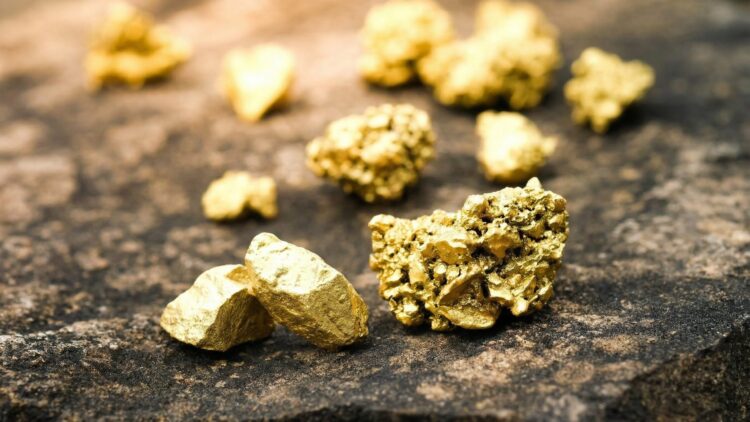
The old fantasy of transforming lead into gold is now a reality, made possible by some wildly inefficient physics at the Large Hadron Collider at CERN. Researchers at the incredibly expensive facility near Geneva successfully switched lead to gold by smashing ions together, showing that you can indeed cheat nature given enough cash, power, and equipment.
Unfortunately for any aspiring gold-makers—though the scientists probably don’t mind—the gold they made vanished in a split second and the total amount created was essentially nothing.
How this seemingly Medieval witchcraft was even possible
This shiny breakthrough didn’t happen because of magic spells or sketchy potions, but simply by firing beams of lead at one another at nearly light speed. Every now and then, the ions miss a direct hit and instead zip right past one another, getting close enough for their electromagnetic fields to interact violently.
In those rare instances of particle wizardry, a lead nucleus gets shaken up enough to spit out three protons, instantly transforming itself into gold. Consider the job done.
We found gold… at microscopic levels
CERN’s specialized tool for analyzing nuclear disorder, the ALICE experiment, spotted these shifting atoms among the wreckage. According to a report in Nature, the lab tracked 86 billion gold atoms produced by these lead crashes between 2015 and 2018. That sounds like a lot until you do the math and find it adds up to roughly 29 trillionths of a gram.
To put it differently, as a user on Bluesky pointed out, if you ran the test 300 million times and piled up all the resulting gold atoms, you’d have about a dollar’s worth of metal. Making matters worse, most of that new gold vanishes before you can even look at it. The atoms destroy themselves or break apart in a split second.
Yes, it is a real thing
Still, the study published on May 7 in Physical Review Journals points out that changing lead into gold is basically the medieval alchemist’s fantasy becoming reality at the LHC.
According to ALICE team member Uliana Dmitrieva, these are the first observations to actually spot and study the specific signs of gold being created at the LHC in a systematic way.
An annoying bit of alchemy
As soon as a lead nucleus sheds some protons and changes form, it falls out of the precise path needed to keep it looping through the LHC’s vacuum pipe. Within just a few microseconds, it smashes right into the tube walls.
Because of this, the particle beam gradually loses its strength. So, for the researchers, making gold inside the collider is actually more of a headache than a lucky break.
Still, getting a handle on this accidental alchemy is key to interpreting the current tests and figuring out how to build even bigger experiments down the road.
“So, can we turn lead into gold now?”
Easier said than done. Stony Brook University physicist Jiangyong Jia explained that even though an older CERN machine pulled off something similar twenty years ago, this attempt used way more energy, resulting in better odds of making gold and much clearer data.
If you are getting ideas about turning CERN into the world’s priciest coin press, stop right there. Jia noted that understanding these events is vital for keeping the particle beam stable and high-quality, a polite way of saying that the gold is just a byproduct, not a retirement fund.
So, the alchemists were technically correct. Science is capable of turning lead into gold. You just need a 27-kilometer underground tunnel, a government-sized budget, and the patience to accept a payout measured in subatomic particles. Very affordable, right? For now, we will have to wait for a real Marco Bragadini to appear and offer to make up gold to save the economy—just the European Union treasury, instead of just Venetia.