
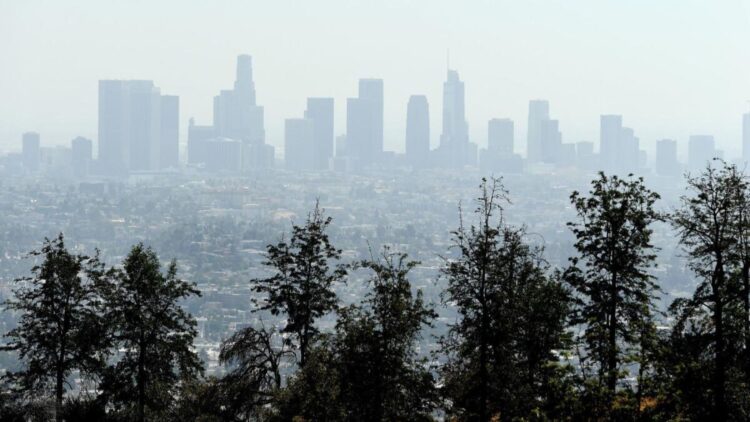
The weather situation in California and Oregon requires extra precautions. The U.S. Environmental Protection Agency (EPA) reported that on Sunday, January 18, 2026, levels of fine particulate matter (PM2.5) pollution reached “unhealthy” levels in several parts of both states. This has led authorities to issue a public health advisory in anticipation of a particulate matter storm that raised air quality to unhealthy levels. The advisory recommends limiting outdoor activities.
This phenomenon is linked to a high concentration of fine particulate matter in the air
It is important that residents of these areas are properly informed, as air quality affects human health, especially for those belonging to at-risk groups, such as the elderly, those with respiratory illnesses, or those with chronic conditions. Official and detailed air quality information has been obtained through the AirNow map, the EPA’s air quality monitoring system, recognized as the primary source for measuring and communicating air pollution risks in the United States. This phenomenon is linked to a high concentration of fine particulate matter in the air, which reduces visibility and can cause respiratory problems. Therefore, avoiding outdoor areas is the best way to minimize exposure to this pollutant.
Particular warnings for communities like Portola in California and John Day in Oregon
The direct recommendation from state authorities is that thousands of residents avoid outdoor activities and remain indoors, especially those in vulnerable groups. The order affects residents of areas marked on the AirNow map, with particular warnings for communities like Portola in California and John Day in Oregon. It’s important to note that this is not a mandatory quarantine with penalties; authorities have simply asked residents to limit outings as much as possible and avoid outdoor activities while this weather event persists.
The United States Environmental Protection Agency detected levels of these particles classified as unhealthy
The danger of these particles lies in their size; they are so small that they can penetrate deep into the lungs and even reach the bloodstream. PM2.5 fine particulate matter is one of the most harmful forms of air pollution; it has a diameter of less than 2.5 micrometers. The United States Environmental Protection Agency, through its air quality monitoring system, detected levels of these particles classified as unhealthy and very unhealthy in various regions of California and Oregon.
Schools, health centers, and public agencies have also received instructions on how to adapt activities
The EPA considers that high exposure to PM2.5 can aggravate or trigger respiratory and cardiovascular problems. Therefore, extreme caution is advised, especially among vulnerable individuals. Exposure to these particles can worsen conditions such as asthma, bronchitis, and heart disease. Consequently, among the main recommendations from the government are keeping doors and windows closed, using air purifiers if available, and avoiding outdoor exercise until atmospheric conditions improve. Schools, health centers, and public agencies have also received instructions on how to adapt activities and protect at-risk groups for the duration of this phenomenon.
To understand the specific AQI numbers, in the current case, the at-risk areas exceed the threshold of 151 points. The AQI is a tool that classifies air quality on a scale of 0 to 500 according to the level of pollution. Therefore, from 0–50, the air is considered to be of good quality; between 51–100, the air quality is moderate and could only affect highly sensitive individuals. In the 101–150 range, it is considered unhealthy for sensitive groups. And between 151 and 200, it is unhealthy for most people and warrants precautionary recommendations. Exposure to this type of polluted air can aggravate existing health problems and cause symptoms such as coughing, difficulty breathing, and irritation of the eyes, nose, and throat. It is therefore important to follow the advice of experts.