
Global demand for energy just keeps climbing. A mix of growing populations, more people using heaters and air conditioners, our addiction to modern gadgets, and power-hungry tech like AI and blockchain are all pushing up consumption.
We could just build more power plants, of course, but it might be easier to simply get more juice out of the facilities we already have, specifically the wind and solar farms that sit idle half the time. Wind turbines stop spinning when the air is calm, and solar panels are useless once the sun goes down… until now.
A new (orbital) spin on solar panels
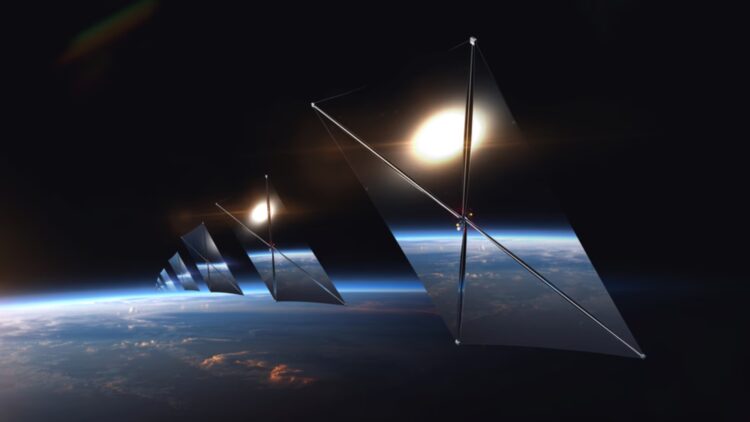
An American startup called Reflect Orbital is trying to change that rule. Their plan is to provide sunshine whenever someone asks for it—creating intentional light pollution in the process—by launching thousands, or maybe even hundreds of thousands, of mirrored satellites into low-Earth orbit to bounce sunlight down to existing solar farms. By aiming that reflection at the panels after dark, they could force those facilities to keep generating electricity through the night.
“What could go wrong?”
Like every other over-optimistic company with a bizarre prototype, Reflect Orbital ignores a bunch of downsides, ranging from threats to public health and safety to impacts on nature, astronomy, and the stability of the environment around Earth. This is the actual price we’d pay for generating solar energy at night. On a bright, cloudless day when the sun is high up and shining its strongest through the atmosphere, about 1360 watts of power hits every single square meter of ground. You can capture that energy by turning it straight into electricity with solar panels.
Alternatively, you can bounce the light onto a water tank to make it boil, which creates steam to spin a turbine and generate power. From there, the electricity can be sent out for immediate use or kept in a battery until it’s needed.
Easier said than done
When the sun sits lower in the sky—meaning it’s far from being directly overhead—the amount of energy hitting the ground drops significantly. The sunlight spreads out across the Earth’s curve and has to push through a thicker layer of atmosphere, which weakens the beam. Once the sun slips below the horizon, covering the time from dusk until dawn, solar generation hits zero.
But imagine if we placed a network of mirrors in space that could bounce that sunlight back down to the surface, even after dark? That is the core concept driving Reflect Orbital’s plan.
It’s first test satellite is called Earendil-1. The Earendil-1 is 18 meters long, and will be launch this year. This initial trial will send the satellite about 625 kilometers up, well above the atmosphere, to bounce sunlight down to a specific spot on the ground that already has solar energy equipment.
Their plan is to have 4,000 satellites orbiting by 2030, each one much bigger—around 54 meters wide, or nine times the surface area of the test unit, based on what the founder says—teaming up to aim reflected light at different power plants across the globe. With that many satellites, the objective is to provide at least 200 watts of power to these solar farms, which is roughly 15% of what the sun provides at noon.
Do we really need this to cater to humankind’s energy needs?
The saddest thing about Reflect Orbital’s plan is that we don’t even need it. We already have ways to fix the problems they claim to be solving, and our current options don’t come with the nasty side effects of putting giant mirrors in space. Unfortunately, the space immediately around our planet is still basically lawless territory.
If the FCC or governments around the globe don’t step in to stop this, the light pollution and the loss of our night sky will hurt everyone—from astronomers and farmers to regular consumers and anyone else trying to survive on this planet.