
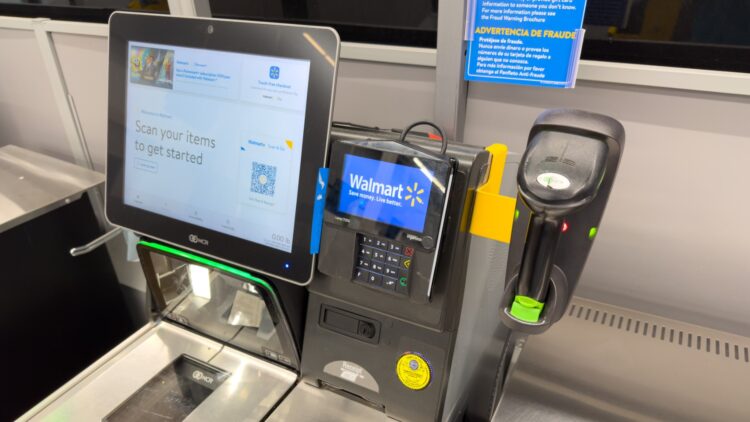
Walmart has pedaled back on their checkout system. The retail giant has started pulling self-checkout machines from certain locations, like a Supercenter in Shrewsbury, Missouri, because of a big spike… in theft-related police calls.
Self-checkout lines, millions of dollars invested in RFID technology that scanned automatically the packaging of any product without having to actively search for the old-fashioned bar-code… all for nothing. That automatic Utopia where clients could serve themselves without having to interact with a human employee didn’t take into account one variable—this is no longer a high-trust society.
Maybe it never was. Our modern cash registers—the ones Walmart was so adamant on replacing with self-checkouts— come from the need of preventing theft within a store. In this case, the theft (or “shrink”, as retailers euphemistically say nowadays) was perpetrated by the employees themselves.
James Clear was clear (badumtss) about this kind of behaviour in his best-selling book Atomic Habits. The Third Law of Behaviour Change states that the most effective way of breaking a bad habit is by making it difficult. Just like it is more difficult to binge on chocolates if we make a conscious choice not to stock them at home, having to take our car or walk to the nearest convenience store increases the friction, and then our chocolate cravings are overwhelmed by our laziness.
Why cash registers and self-checkout kiosks are the same in essence
The cash register was invented exactly for this. In the 1870s, James Ritty had a popular saloon in Dayton, Ohio. However, something was off: no matter how many cigars and bottles of whiskey the business sold, he was barely breaking even. Mr. Ritty suspected the bartenders were pocketing most of the cash, but surveillance cameras wouldn’t be invented until a hundred years later, so he had no way to watch them 24/7.
During a steamboat trip to Europe, James Ritty noticed that the ship had a mechanism that counted the number of revolutions the ship’s propeller made. That was his lightbulb moment: “If a machine can count wheel turns, why can’t a machine count money?”
Fast forward to 1879, he was able to build the first cash register prototype in 1879. It looked like a clock, which pointed at dollars and cents. It’s mechanism required the employee to type the exact change they were going to charge the client, which would show up on the clock. The client would clearly see the exact amount on the clock, so the employee would no longer be able to overcharge customers and pocket the difference.
They eventually added the cash drawer and bell, which counted as an effective alarm system. After all, the cash drawer could not be open without pressing a key, which would trigger the bell. If there was no sell, it remained silent… but if they served a customer and there was no ping, it was theft.
We already know want happened; once James Ritty installed the machine in his saloon, the theft stopped overnight. Profits soared, business prospered, and most shops nowadays have a great-grandchild model of this first prototype.
Walmart says goodbye to self-checkout in certain locations
Fast forward to 2025, Walmart’s move takes none by surprise after police records showed that trouble at the store dropped sharply as soon as the self-checkout kiosks were taken out. Police in Shrewsbury said that during the first five months of last year, they had 509 calls to the store, but that number fell to just 183 during the same time this year after the machines disappeared.
The number of arrests was cut by over 50 percent, too. Police Chief Lisa Vargas told the press that it was a massive improvement. Both Walmart employees and police officers are relieved the store changes made criminality drop.
Self-checkout were vulnerable to scams too, not only theft. According to a report from Fox 43, a man from Gettysburg was arrested in March for supposedly sticking card-skimming devices on the self-checkout registers at Walmarts in Gettysburg and Lower Allen Township, Pennsylvania. Reports suggest Walmart is rethinking its broader game plan, even as it tries out “Scan & Go” tech at Sam’s Club stores as a different option.