
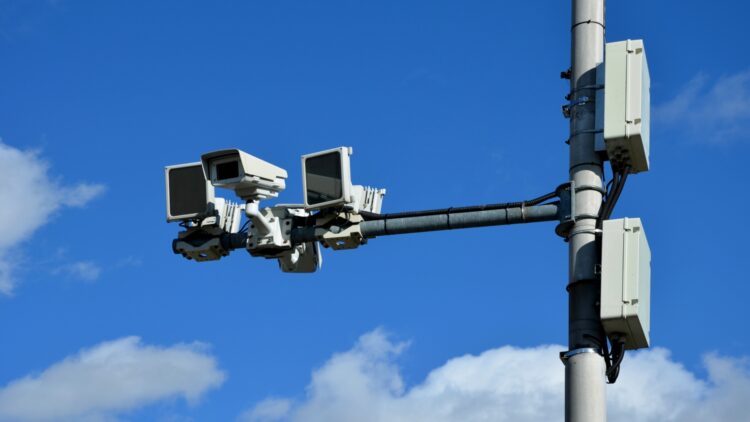
Trying to send a quick text back home with one hand while driving might cost you dearly in Arkansas. The Arkansas Department of Transportation (ARDOT) has officially revealed that the cameras currently catching speeders in work zones will start looking for handheld phone use by mid-January.
When the technology sees a driver holding a device, it messages an Arkansas Highway Police officer waiting up the road, who can then stop the car once it clears the construction area. ARDOT points out that this system won’t be sending tickets through the mail. A real officer has to be on the scene to issue a warning or fine, so nobody will get in trouble based on the video alone. The cameras are just there to support the police, not replace them.
The ever-watching Big Brother on the road
Acusensus, a company out of Australia, manufactures these cameras, and their AI systems are already running in places like the UK, Greece, Australia, and various other nations worldwide. Just a few weeks ago, we shared news that one of these cameras testing in Athens caught almost 2,500 rule-breakers and sent out 1,000 automatic tickets in just four days. But what exactly happens to the recorded video? Who exactly has access to surveilling all that footage?
Returning to the States, Dave Parker from ARDOT told Carscoops that Acusensus relies on AI to spot photos that probably show violations—like drivers with phones or passengers without seatbelts—so they can decide if a reviewer needs to look at them. As soon as the system flags a possible issue, a qualified police officer takes over.
Parker noted that an officer checks every single photo before anyone decides to stop the driver. Holding a device in an Arkansas work zone is already against the law, but officials admit it’s been tough to actually make people stick to it.
Arkansas Highway Police Chief Jeff Holmes sees this tech as a realistic fix, pointing out that hands-free laws in construction areas have historically been a pain to enforce because it’s hard to get a clear look at the driver.
Forewarned is forearmed
It’s important to mention that ARDOT is putting up signs to let drivers know about the cameras before they enter these work areas. As you might expect, this brings up privacy issues that we’ve been hearing about a lot lately. Also, state officials don’t keep track of false alarms, so there’s no way to know how often officers have to look at mistakes.
ARDOT says state laws put strict limits on how the data gets used. Everything the cameras record has to be wiped unless it’s needed for a warning or a ticket. Basically, authorities claim the footage isn’t being stored or used for anything other than enforcement. Parker explained that images are kept only for court, and the system automatically deletes everything else that same day unless an officer saves it for a case.
So, while Arkansas isn’t mailing out robot-generated tickets, it is giving police a new digital tool to help them see what’s happening.
FAQs
Is it illegal to hold my phone while driving in Arkansas?
Yes! It’s illegal to hold your phone while driving in an Arkansas construction zone—you are supposed to have both hands at the wheel. If you are caught redhanded—or phone-handed, badumtsss—you could be stopped and get a substantial fine.
Who looks at the pictures taken by the cameras?
It’s verified in two different occasions. First, an AI scans the traffic, and makes a notification if the computer program happens to catch something that could potentially be a phone being held in a hand. That photograph is sent to a real (i.e. human) police officer who will analyse the photograph to make sure.
Will I get a ticket in the mail with these surveillance cameras?
Despite the rumours, these cameras are not programmed to send automatic tickets—unlike some red-light cameras. If a camera catches you with a phone in hand, it will send a message to the nearest patrolling police officer, who will verify the photo from the camera and pull you over the good old-fashioned way to write you a ticket in person.