
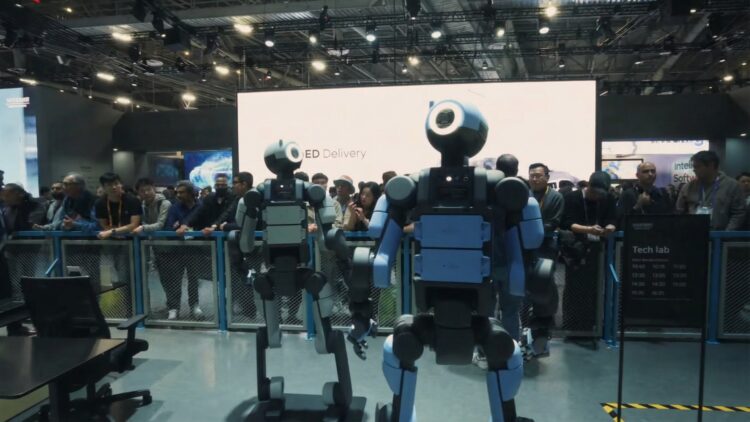
When we think about the normalization of robots in all areas of everyday life, we can’t help but feel a knot in our stomachs. After all, if all jobs end up being mechanized and automated so that they can be done by humanoid robots… How will flesh-and-blood humans earn a living? This is why many people are totally against any automation or use of artificial intelligence and, in general, are apprehensive about the rapid development of modern technology in this decade.
Despite all the dystopian science fiction literature and films in which machines have taken over the world and dehumanized society, there are companies that still want to use machines without completely automating the entire process. This is the case with Hyundai Motor Club, which during CES 2026, held in Las Vegas this January, not only presented its new cars, but also presented its new perspective on modern industrialization.
Hyundai’s optimism against the general public
Under the slogan Partnering Human Progress, the company has unveiled a strategy where technology does not replace people, but is a tool that increases productivity. To this end, they have coined the motto “Partnering Human Progress,” and assure us that technology does not replace people, but simply works to serve them.
It all sounds very nice, worthy of a marketing campaign created by Don Draper and Peggy Olson themselves from Mad Men, but in practical terms… What exactly does this mean?
According to Hyundai, until now, the industry has always required (human) operators to adapt to the machine: workers had to bend their backs, strain their eyes, or repeat unnatural movements to feed a rigid assembly line. Now, it is the robot that must adapt to humans, and not the other way around.
Why does Hyundai want to use robots?
To achieve this, Hyundai relies on the technical concept of physical artificial intelligence. In recent years, we have become accustomed to generative artificial intelligence, which refers to text-processing chats that we interact with via our computers or smartphones. However, this physical artificial intelligence is integrated into a humanoid robot, which is capable of interacting with the real world, feels gravity, understands and processes the texture of objects, and even notices the presence of human beings.
The goal of this technology is to eradicate the famous “3 D’s” of industrial work: Dull, Dirty, and Dangerous. In other words, the humanoid robot will enter high-temperature areas and carry 100-pound boxes, performing the strenuous physical work that until now has been done by humans. This will free up workers, who can then devote themselves to supervising, making complex decisions, and contributing creativity, without feeling the physical strain that would have been experienced just a generation ago.
Atlas, Hyundai’s new sidekick
All this sounds great in theory, but apart from good software, you need hardware capable of performing these actions. This is where the Atlas robot comes into the equation: the humanoid robot is the result of a collaboration between Hyundai and Boston Dynamics, which was acquired by the car company a few years ago.
Videos showing noisy, clunky robots powered by heavy and cumbersome hydraulic systems are a thing of the past. This Atlas model is fully electric, making it quieter, more energy efficient, and with physical capabilities that easily surpass even those of an Olympic athlete.
The humanoid robot has 56 mobility joints, allowing it a range of motion that would be impossible even for the most flexible human contortionist. It is capable of lifting up to 50 kg, making it the ideal candidate for handling heavy automotive components and moving boxes in logistics centers.
However, this brute strength does not mean it lacks delicacy. Atlas is well equipped with advanced hands that have the best high-precision tactile sensors on the market. Just as a Golden Retriever knows how to pick up an egg in its mouth without breaking it, the Atlas robot is able to sense exactly what it is grasping and applies just the right amount of pressure so as not to break a fragile item, but it also knows how to pick up a heavy tool without letting it slip.
For now, we will have to wait until 2028, when the Atlas robot officially begins working at the Hyundai plant located in Georgia, United States.