
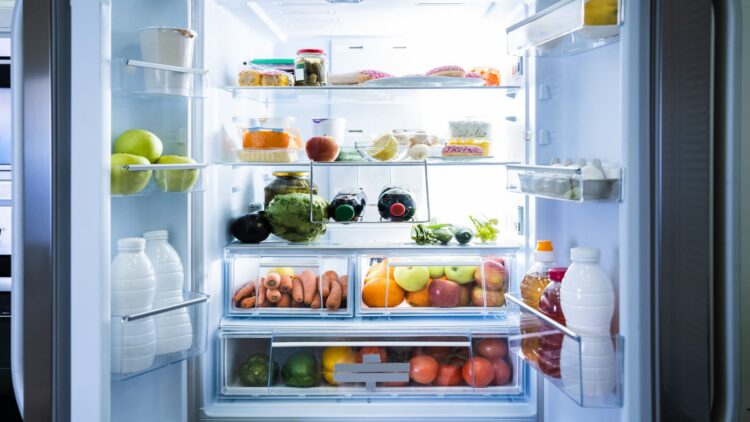
Refrigerators are places where we store food so it lasts longer than if left at room temperature. However, experts warn of problems that can arise if we don’t clean the refrigerator regularly. Food engineer and science communicator Mariana Zapién explains: “Bacteria can survive in your refrigerator and contaminate food if it’s not stored properly.” And the scientific reality is that cold doesn’t kill bacteria; it only slows down their metabolism.
Bacteria can form biofilms, which are organized communities that adhere to surfaces
Therefore, although it may seem like a safe place to store food, the refrigerator can become a breeding ground for contamination if it is not properly cleaned and kept at the correct temperature. Zapién bases this on a study published in the Journal of Food Protection that analyzed 100 domestic refrigerators and detected contaminating bacteria in three locations: the bottom, the egg compartment, and the fruit compartment. The food engineer explains that bacteria can form biofilms, which are organized communities that adhere to surfaces.
When defrosting or opening the door, bacteria can reactivate and contaminate fresh food
Other studies on refrigerators and the bacteria they may harbor have analyzed households and found that the problem lies in the temperature. Researchers discovered that the average temperature in refrigerators is 5.3°C, just above the recommended safe range of 0 to 5°C. This means that when defrosting or opening the door, bacteria can reactivate and contaminate fresh food. Furthermore, at higher temperatures, bacteria can multiply rapidly, increasing the risk of food spoilage or even illness.
It’s vital that the surfaces aren’t cold, as detergents and disinfectants lose effectiveness at low temperatures
With that in mind, the steps for cleaning the refrigerator are simple. First, it’s recommended to completely empty the freezer and refrigerator compartments. Next, place all the food in a cooler to maintain the cold chain. After that, completely unplug the refrigerator. It’s vital that the surfaces aren’t cold, as detergents and disinfectants lose effectiveness at low temperatures. It’s also important to clean the rubber door seals. Every few months, check for mold or dirt and make sure the seals are tight. In those small spaces, bacteria that we can’t even see can thrive.
The food engineer recommends preparing a disinfectant solution by mixing one tablespoon of bleach per liter of water
Other tips for keeping bacteria at bay include minimizing how often you open the refrigerator door. For example, you shouldn’t leave the refrigerator door open while putting away groceries. Using a rotating food organizer is also recommended. This will help you find the product or food item you’re looking for more quickly. Additionally, the food engineer recommends preparing a disinfectant solution by mixing one tablespoon of bleach per liter of water. Once everything is cleaned with soap and water, apply this solution to all internal surfaces until they are visibly wet. This ensures that the space is bacteria-free and safe for storing food.
68% of households never adjust the temperature
It’s recommended to clean your refrigerator every three to six months to prevent bacteria from growing and multiplying. Regarding temperature, although many modern refrigerators have a built-in sensor, it often only displays the temperature at one point. In fact, 68% of households never adjust the temperature. Finally, once the refrigerator is clean and dry, plug it back in. Wait for it to reach its optimal cooling temperature before putting food back in. Lastly, it’s recommended to arrange everything so that air can circulate freely between the items. You can try to keep the refrigerator about 75% full to ensure proper air circulation throughout.