
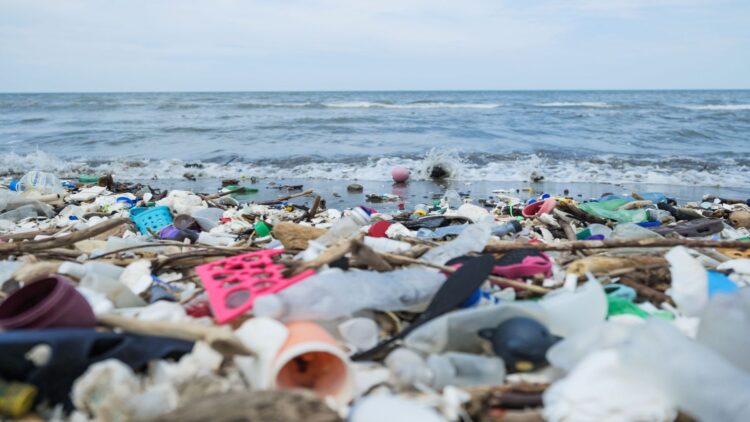
Pollution is one of the biggest problems facing planet Earth, a consequence of poor practices and decisions made by humankind. New research in the Mariana Trench, one of the most remote places in the Pacific Ocean between Japan and the Philippines, discovered a species of amphipod at a depth of almost 7,000 meters with plastic in its body. Plastic is everywhere in the ocean, affecting the species that live in these areas. According to the research, marine animals are settling on these sorts of plastic islands, where they live, feed, and reproduce.
The significance of plastic for marine life, and for the ocean as a whole, is only just beginning to be understood
Researchers are beginning to see this plastic debris not just as waste, but as a new type of habitat. Specifically, scientists from Newcastle University and WWF named the new species Eurythenes plasticus to draw attention to the extent of plastic pollution worldwide. The significance of plastic for marine life, and for the ocean as a whole, is only just beginning to be understood. Precisely because of its severity, since it is located in such remote parts of the Pacific Ocean, it seems not to affect humans, but the fact is that it does. The open ocean has always been too harsh for coastal life. Without rocks, without a seabed, without islands, floating debris ends up being the place where species arrive, as it provides a surface.
Many of these fish are then caught, processed, and sold in supermarkets
Experts offer more practical examples to demonstrate the dangers of plastic in the ocean. Fish end up feeding on pieces of plastic, which drift and are carried by ocean currents. Many of these fish are then caught, processed, and sold in supermarkets. In this way, humans end up ingesting the tiny plastic fibers that lodge inside the fish. And this is just one example, which doesn’t even begin to illustrate the enormous negative impact that plastic has on planet Earth.
Pollution has many facets through which planet Earth is tremendously damaged
Not to mention the physical harm it can cause to animals. Many have surely seen photos of turtles strangling themselves with pieces of plastic lodged in their necks, or dolphins with their mouths caught in plastic gears. Pollution has many facets through which planet Earth is tremendously damaged. Specifically, the new species cataloged by researchers contains particles of PET plastic, which is regularly used in water bottles and other beverages, clothing, and household items, as specified on the World Wildlife Fund (WWF) website.
“The newly discovered species Eurythenes plasticus shows us the profound consequences of our inadequate management of plastic waste” – Heike Vesper
Speaking of specific data, the researchers discovered that 98% of the fragments contained attached marine life. In total, they identified 46 different types of small animals, including barnacles, crabs, amphipods, and anemones. According to Heike Vesper, director of the Marine Program at WWF-Germany, “the newly discovered species Eurythenes plasticus shows us the profound consequences of our inadequate management of plastic waste.”
Animals that normally live on rocks, piers, or the seabed are now surviving far from the coast
Of the species mentioned above, 37 are usually found near coastlines. This means that animals that normally live on rocks, piers, or the seabed are now surviving far from the coast. This is a very serious situation. “There are species we don’t yet know about, which inhabit the deepest and most remote places on the planet and are already contaminated with our plastic. Plastics are in the air we breathe, in the water we drink, and now also in animals that live far from human civilization,” emphasizes Heike Vesper.