
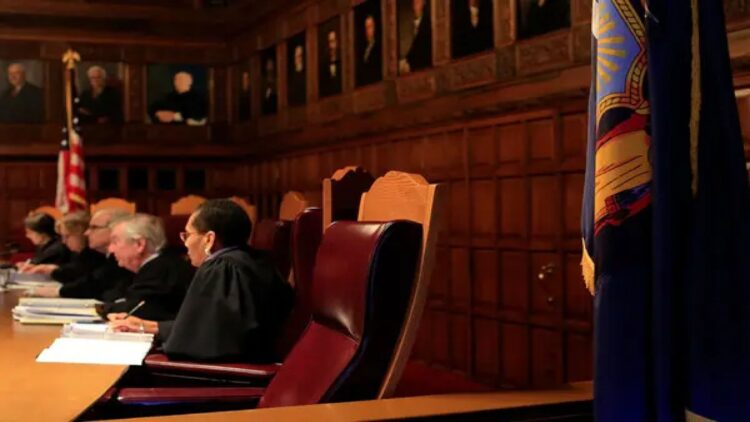
When people say that if you do what you love, you’ll never work a day in your life, they’re referring to the judges featured in this story. Michael Misiaszek, of Oneida, in Madison County, and Mark Saltarelli, of Tonawanda, in Erie County, declared unconstitutional a law that requires municipal court judges throughout the state to retire at age 70.
The challenge to the law was filed by the two municipal court judges who were forced to retire
This is a common situation in some cases where workers feel they still have the health and capabilities necessary to perform their jobs. The challenge to the law was filed by the two municipal court judges who were forced to retire. This is reminiscent of a recent case in which higher courts had to overturn decisions by Queens Judge Michael Aloise regarding evidence and the length of sentences imposed on defendants. According to reports, the judge made several legal errors and was therefore required to retire.
In this case, Misiaszek had four years left in his term when he was forced to retire due to his age. Following the precedent set by the Queens judge, state court authorities were compelled to decide whether more than a dozen New York City judges over the age of 70 could continue serving beyond retirement. In Saltarelli’s case, the judge was ineligible for reelection because he had already reached the age of 70.
O’Sullivan stated that it was “illogical” that other judges were not required to retire at age 70
Regarding Judge Michael Aloise’s case, a court records database shows that the Queens judge is an outlier in terms of legal errors. It should be noted that information about the New York judiciary has become more public in recent years. In the case of the two judges seeking to continue serving past age 70, Patrick J. O’Sullivan, a judge of the Madison County State Supreme Court, recently issued his ruling. In his ruling, O’Sullivan stated that it was “illogical” that other judges, such as those in towns or cities, were not required to retire at age 70, while many municipal court judges were.
The judge stated that a state law requiring municipal court judges to retire at age 70 is nullified by the Equal Rights Amendment, passed by voters in 2024. However, criminal justice reform advocates Peter F. Martin and Katie Schaffer asserted in their letter to state court officials that the need for judges should not supersede the need for justice. In this case, the ruling applies only to municipal court judges outside of New York City. However, it could affect similar age restrictions for other judges in the future.
“They provide no evidence demonstrating a direct correlation between advancing general considerations of judicial competence and reaching 70 years of age” – Patrick J. O’Sullivan
These cases represent a turning point for the future of judges. O’Sullivan also stated that the state failed to demonstrate why 70 should be the age limit. Those who support this legislation also support including more protections against unequal treatment based on age, among other things. “They provide no evidence demonstrating a direct correlation between advancing general considerations of judicial competence and reaching 70 years of age,” O’Sullivan stated.
The fact is that this movement calling for raising the retirement age for New York judges, so they can continue working and alleviate the pressure on an overburdened judicial system, clashes with the news about the Queens judge. It’s clear that age shouldn’t be a discriminatory factor, but at the same time, in professions like this, sound judgment must be scrutinized. We must remember that judges make decisions that directly affect the lives of the country’s citizens, so it’s crucial that these decisions are made with sound judgment and as much neutrality as possible, based on a proper understanding of the law.