
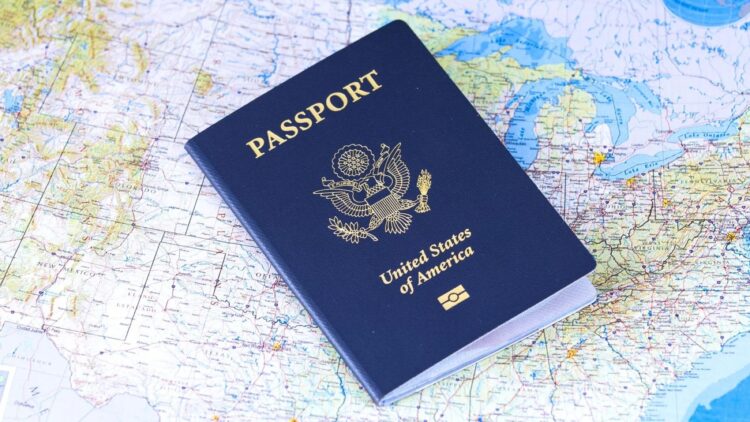
Regulations for foreign citizens in the United States are facing challenges. In this case, the issue concerns passport renewals. The Trump administration has implemented a new restriction that prevents the automatic renewal of U.S. passports for citizens and naturalized citizens whose name on the application does not match the name on their passport.
The measure was announced in an official bulletin explaining that the consular system automatically blocks any renewal attempt
The restriction affects those who use a different name than the one on their passport but lack official documentation to support it. This will only be lifted if the person presents legal documentation proving a change of identity. In all other cases, the system rejects the update without allowing it to proceed. The measure, in effect since December 27, 2025, was announced in an official bulletin explaining that the consular system automatically blocks any renewal attempt when the name provided by the applicant does not match the one on their previous passport.
The restriction applies to any U.S. passport holder, whether a naturalized citizen or a U.S. citizen
It’s important to note that the block applies even if the document is valid and the process is initiated online or by mail. The restriction applies to any U.S. passport holder, whether a naturalized citizen or a U.S. citizen by birth, who has adopted a name for habitual, personal, or professional use that has not been legally registered with a competent authority. The restriction affects those who use a name different from the one on their passport but lack official documentation to support it. That’s precisely the key distinction to keep in mind.
Even if the document is still valid and the renewal is processed online or by mail
From this point on, the problem arises when the name change was never formalized with an authority. Even if the document is still valid and the renewal is processed online or by mail, it’s important to have the documents in order. In these cases, the system indicated by the State Department rejects the update request without allowing the process to move forward. To update a passport, the government requires an official document proving the name change. Without this proof, it cannot be renewed either by mail or online.
If these documents are not available, it will be necessary to legalize the name before beginning the process
Therefore, the accepted documents are a marriage certificate; a divorce decree; a court order for name change; or an equivalent official document issued by a competent authority. Without one of these documents, foreigners and citizens whose name differs from the one on their passport must first regularize their legal status before attempting to renew their passport. If these documents are not available, it will be necessary to legalize the name before beginning the process. Hence the importance of having all documents in order or, at least, being properly informed.
This is very important because maintaining a valid passport not only allows international travel but also serves as official proof of citizenship and an essential identification tool. Therefore, the measure has generated concern among people who have used different names for cultural, professional, or personal reasons without legally formalizing them. With this new regulation, the United States will eliminate passports that do not meet renewal criteria, affecting thousands of people who did not plan to update them in time. Immigration documentation experts point out that this type of restriction can affect not only international travel but also consular procedures, visas, and other identification documents. Especially in a country the size of the United States, travel documents are essential for boarding a plane and avoiding journeys of more than 10 hours from one point to another within the country.