
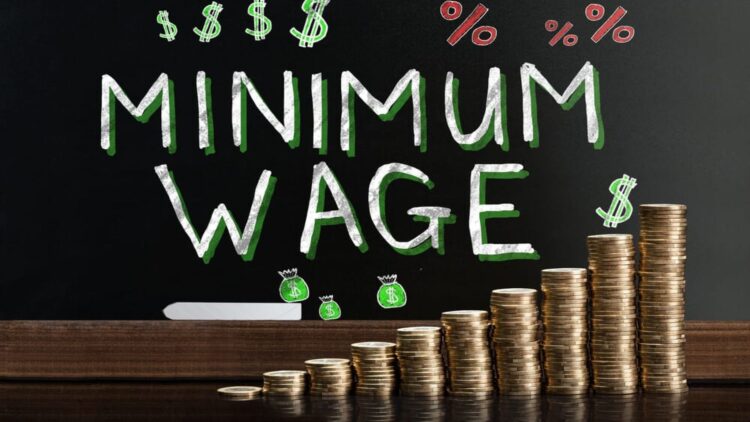
Americans are preparing for the expected wage increase in 2026. Specifically, the Washington State Department of Labor and Industries (L&I) announced that Washington’s minimum wage will increase by 2.8% next year, reaching $17.13 per hour. Millions of Americans will see their wages rise in just a few days thanks to new regulations that will take effect in 2026.
The increase represents a 47-cent rise over the 2025 minimum hourly wage, which was $16.66
According to official information, state law requires L&I to calculate the minimum wage for the following year using the Consumer Price Index for Urban Wage Earners and Clerks (CPI-W) from the Bureau of Labor Statistics. The increase represents a 47-cent rise over the 2025 minimum hourly wage, which was $16.66. L&I compares the CPI-W from August of the previous year to the CPI-W from August of the current year to determine if any changes are necessary. L&I adjusts the minimum wage based on the percentage increase in the CPI-W. Thus, Washington will raise its minimum hourly wage to $17.13 next year. The Department of Labor and Industries emphasized that “Washington employers must pay the majority of employees at least the minimum wage for every hour worked.”
Washington State’s current minimum wage of $16.66 is the highest in the nation
The information comes from details published on the Washington State Department of Labor and Industries website. Seattle, SeaTac, Tukwila, Renton, Bellingham, Everett, Burien, and unincorporated King County currently have higher minimum wages. The federal minimum wage remains at $7.25 per hour. Local jurisdictions also play a role, with some having higher or lower minimum wage rates and different labor regulations compared to the state. Washington State’s current minimum wage of $16.66 is the highest in the nation. Local governments can set higher minimum wages than the state.
Many agricultural and non-agricultural positions qualify for the $17.13 wage in 2026
As mentioned above, L&I uses changes to the CPI-W to calculate the minimum wage that certain types of employees must earn to be considered exempt workers who do not receive overtime pay. This affects executive, administrative, and professional workers, as well as IT professionals. This new legislation comes from Washington, D.C.; most workers will be eligible for the additional pay starting January 1, 2026. Generally, many agricultural and non-agricultural positions qualify for the $17.13 wage in 2026. However, there are exceptions.
Washington workers can expect to receive all tips and service charges they are entitled to under the Minimum Wage Act
Workers who meet certain criteria and those in jobs exempt from the Minimum Wage Law may receive wages below this rate from employers. In fact, in Washington state, children aged 14 to 15 must receive at least 85% of the state minimum wage. Residents can find more information on the Local Minimum Wage website. It’s important to note that the new rate is typically announced on September 30th and officially takes effect on New Year’s Day.
By 2026, all employers will be required to pay overtime-exempt workers at least 2.25 times the minimum wage. Additionally, Washington workers can expect to receive all tips and service charges they are entitled to under the Minimum Wage Act, and “businesses cannot use tips and service charges paid to an employee as part of an employee’s minimum hourly wage,” according to the law. In any case, this means that an exempt employee must earn at least $1,541.70 per week ($80,168.40 per year).