
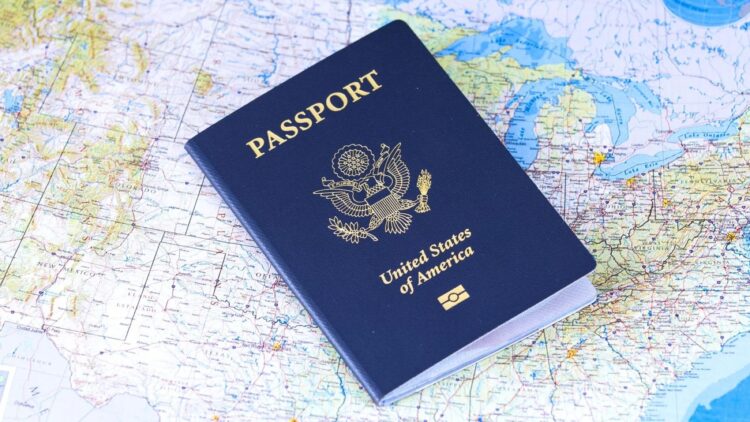
A passport is a set of framed pages with a relatively hard cover and a unique design for each country. A document that seems as mundane as a diary is as important as freedom itself. The country to which a passport belongs determines whether that citizen of the world has more or less freedom of movement. The United States passport has lost popularity in recent times; according to local media, it currently ranks between 9th and 11th globally among the most valuable passports.
This difference reflects a remarkable evolution in the patterns of openness and reciprocity between states
So what makes one passport more valuable than another? Primarily, the number of countries it grants visa-free access to. This difference reflects a remarkable evolution in the patterns of openness and reciprocity between states, as well as the cumulative effects of migration policies, diplomatic relations, bilateral agreements, and international perceptions. In 2014, the United States and the United Kingdom jointly held the number one spot, but the UK has fallen to number eight in the October 2025 ranking.
Like the first recorded “passport” from ancient Egypt some 3,500 years ago, the first passports in the United States, and around the world, were simply travel documents. In fact, that’s what they still are. Henley & Partners monitors which countries’ passports offer the greatest and least global mobility, using data from the International Air Transport Association (IATA). And it’s on that list that the United States has seen a sharp decline in its global popularity.
United States is one of the countries that most frequently denies visas
Another interesting fact is that while US passport holders can access 180 of the 227 destinations without a visa, the United States only allows visa-free entry for 46 other nationalities, placing it 77th in the Henley Openness Index, just ahead of Iraq. This is because it’s not only about the countries one can enter without a visa, but also about the countries a country allows visa-free entry to. And this doesn’t take into account that the United States is one of the countries that most frequently denies visas, especially to citizens of countries further south in its own continent.
And topping this list is Singaporean citizens, whose passport ranks number one, enjoying visa-free access to 193 of the 227 travel destinations worldwide. Henley & Partners noted that the United States’ decline this year began with the loss of visa-free access to Brazil in April due to a lack of reciprocity, exacerbated by being left off China’s rapidly expanding visa waiver list. Indeed, the history of passports is the history of international politics.
“The decline in the strength of the U.S. passport over the past decade is more than a simple reshuffling of the rankings”
As for the design, passport colors are usually blue, green, or maroon—they don’t vary to more extravagant colors. Specifically, in the case of the United States, in 1976, to commemorate the United States Bicentennial, the color of regular passports was changed to blue. Except for a brief period between 1993 and 1994, when green passports were issued to commemorate the 200th anniversary of the U.S. Consular Service, the standard color for ordinary travelers remains blue.
As we can see, it’s not just about popularity; it’s about international relations that affect where a person can and cannot go. “The decline in the strength of the U.S. passport over the past decade is more than a simple reshuffling of the rankings: it signals a fundamental shift in global mobility and soft power dynamics,” said Dr. Christian H. Kaelin, president of Henley & Partners, in a statement. Hence the importance of each state’s policies and decisions. “Nations that embrace openness and cooperation are moving forward, while those resting on past privileges are falling behind.”