
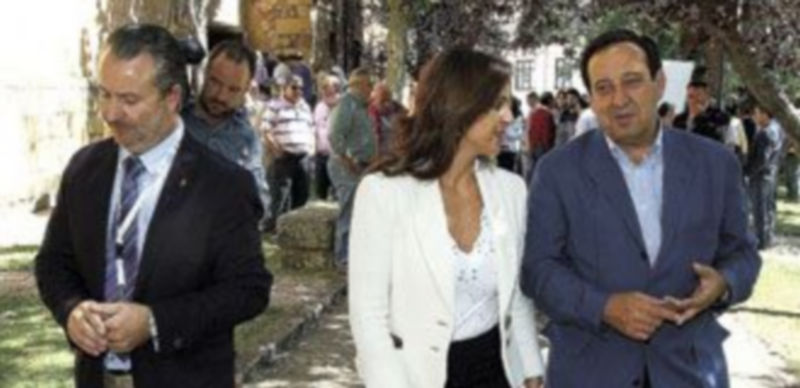
El presidente regional de Asaja, Donaciano Dujo, resultó ayer reelegido en su cargo en el marco del VIII Congreso de la organización celebrado en Soria con la presencia de 200 compromisarios de las nueve provincias de Castilla y León. Dujo, que obtuvo un apoyo mayoritario de los representantes de Asaja en la Comunidad, consideró «lamentable» que los precios en el sector ganadero «estén por debajo de los costes» y que se carezca de una política presupuestaria para la agricultura y ganadería por parte de las administraciones.
El presidente regional de Asaja consideró inadmisible «que un sector se esté arruinando por trabajar» en referencia a la situación que atraviesa la ganadería en Castilla y León, donde, añadió, los altos costes en los productos para las explotaciones no se corresponden con el bajo precio al que los ganaderos están vendiendo en el mercado. Dujo habló de pérdidas en el sector agravadas en el presente ejercicio.
Además, el reelegido presidente regional consideró negativa para el sector agrícola y ganadero la subida del IVA a partir del 1 de septiembre. Dujo habló de «encarecimiento de los costes de sector» y abogó por «crecimiento y consumo y no encorsetarnos con subidas de impuestos».
Para Donaciano Dujo «sin dinero no se hace nada» en referencia a una tendencia descendente con la que se tira por tierra todas las políticas en materias de incorporación de los jóvenes a las explotaciones, planificación de regadíos o mejoras de las explotaciones agrícolas y la cabaña ganadera.
Consideró fundamental la nueva PAC para el apoyo al profesional con la responsabilidad de ser «los encargados de producir los alimentos para la sociedad»
El presidente agradeció el apoyo de los compromisarios y de toda la organización agraria de Castilla y León en «un mandato nuevo que se ha de coger con más ilusión”. Precisó que está ilusión debe estar «especialmente en el sector ganadero».
Donaciano Dujo resultó reelegido ayer como presidente de Asaja Castilla y León para los cuatro próximos años. El representante de agricultores y ganaderos contó con el apoyo mayoritario de agricultores, ganaderos y representantes de otros sectores con derecho a voto en el congreso celebrado en el Aula Magna Tirso de Molina de Soria. El actual presidente de Asaja en Castilla y León nació en Palencia en 1967 y preside la organización desde el año 2000.
El leonés José Antonio Turrado será el secretario general de la formación. Integran la Directiva los nueve presidentes provinciales, que son Joaquín Antonio Pino, Lino Rodríguez, Marino Fernández, Vicente Calzada, Guzmán Bayón, Alfonso Núñez, Carmelo Gómez, José María Valdivielso y Luis Ángel Cabezas.
