
With the arrival of winter, we can enjoy many things: snowy landscapes, family gatherings and Christmas feasts, gifts from Santa Claus, and movie sessions snuggled under a blanket on the sofa. However, to keep our homes warm, we end up resorting to heating and using the oven more than usual. All well and good, until the electricity bill arrives.
Do we know exactly how much electricity each of our activities consumes? Probably not. In fact, there are three household appliances that significantly increase electricity consumption, even if we don’t fully realize it.
Most electricity-hungry home appliances
The main culprit is our ceramic hob. Traditionally, it has been one of the most energy-consuming appliances. The fact is that humans have a habit of wanting to eat every day, and in winter it is much harder to convince yourself that you just want a cold sandwich. We end up turning it on several times a day, and if we’re cooking something, it can stay on for a long time.
Not all glass-ceramic hobs are the same: while traditional glass-ceramic hobs consume a lot of energy, the second generation—induction hobs—are much more efficient.
Although ceramic hobs are often chosen for their flat surface and easy cleaning, they are more efficient than coil hobs. However, modern induction hobs are more efficient: they transfer between 85% and 90% of their energy to cooking food. In comparison, only 70-80% of the heat is transmitted efficiently in traditional ceramic hobs.
Ceramic hobs operate at a resistance of between 5400 and 5700 W, so you can calculate how much electricity they are using every time you turn them on to cook.
The oven
Unless you’ve moved into a tiny studio apartment, you probably have this appliance in your home. We’re talking about the oven, which is essential for cooking in the West. All roasts, stews, and baked goods turn out delicious in it, but the price to pay is a considerable amount of electricity.
Ovens, like ceramic hobs, also work with heating elements. They usually have between 3000 and 3500 W. Nowadays, many modern ovens have an energy-saving mode, so we can use it to reduce or moderate our energy consumption when baking.
Portable heater
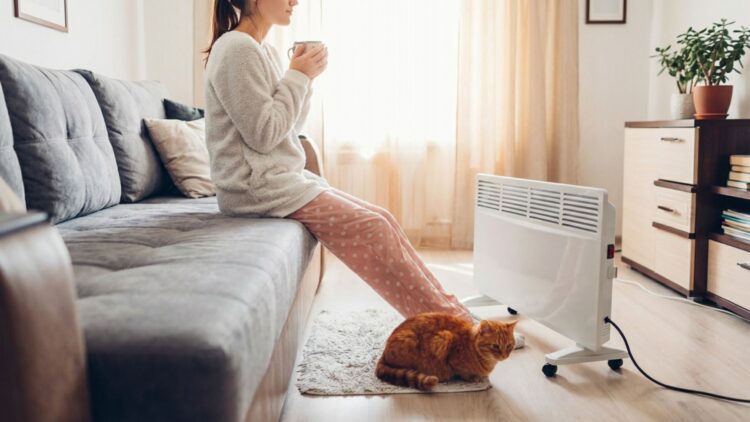
It probably comes as no surprise to anyone, but the third most energy-consuming appliance is the portable heater. They are usually designed to be small so that they can be moved from one room to another (since the alternative would be a centralized heating system, which is much more expensive). However, consumers should not be fooled by their appearance; on average, these appliances consume 2500 W and do not usually have any energy-saving features at all.
How to keep your home warm (and not go broke paying the utility bill)
Other tricks for keeping your home warm even in the middle of winter are to trap the heat you already have. For example, think of your home as a greenhouse for plants. Once you’ve heated it up, you need to make sure that the heat doesn’t escape anywhere. To do this, we can choreograph a daytime and nighttime routine with the blinds. During the day, we raise them as high as possible to let in sunlight, which will act like a magnifying glass through the window panes.
Don’t go out in the sun; the right thing to do is to lower the blinds completely. This will create an air pocket between the window and the blind, which is one of the best insulators you can have.
If you are alone or there are only a few of you, close the doors: if you are in the living room, close the living room door and heat only this room. Body heat and heat from electronic devices will accumulate faster than if you had the door open to the hallway.
Finally, we recommend that you do not leave the window wide open for half an hour. All you need to do is create a cross-draught for five to 10 minutes in the morning to renew the air without cooling the walls or furniture.