
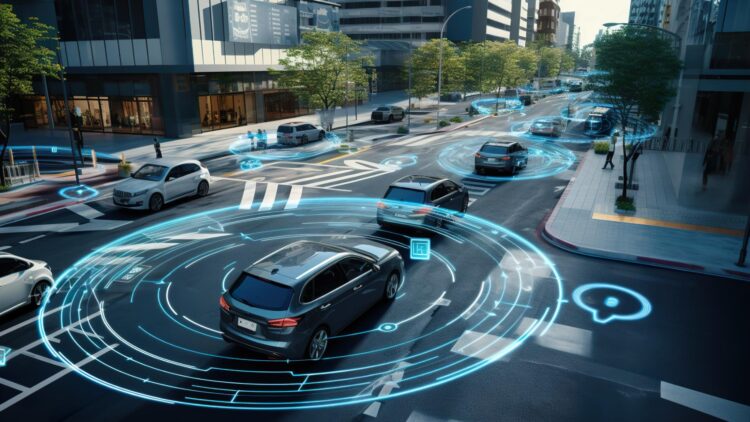
Since generative artificial intelligence entered our lives, companies around the world have been claiming to be investing heavily in this new technology. The automotive industry has been one of the first to sell us this mantra. However, we could be facing a big lie. The latest Gartner report analyzed by The Register tells us that the reality behind visionary CEOs and Nvidia chips in cars hides a dark truth: AI is far from revolutionizing the automotive market.
The AI party is over
The Gartner report predicts another setback for the Western automotive industry. After investing millions in accelerating the transition to electric cars (unsuccessfully in most cases), artificial intelligence is now complicating the future of major companies. So much so that the report claims that by 2030, only 5% of car companies will continue to invest money in artificial intelligence.
According to Pedro Pacheco, an analyst at Gartner, the euphoria surrounding artificial intelligence has already ended in the automotive world. Manufacturers have realized that it is a difficult field to explore, expensive, and without useful applications in the medium term.
But where is the problem supposed to be? The expert claims that many brands tried to run before they learned to walk. They rushed to spend millions on complex functions without having the basics in place: good data management and solid software. Now, the problem is monetary. Training these intelligences costs a fortune and does not yield quick returns. That is why 95% of traditional brands will have to cut costs, stop dreaming of being technology leaders, and go back to what they know how to do: assemble metal parts.
Is this the end of smart driving?
This slowdown in investment will split the market in two. “Smart driving” will have to wait, as it will only be available in a few brands. We are heading towards a scenario of clear winners and losers.
On the one hand, we will have the elite 5%. These will probably be the tech giants that manufacture cars or a couple of luxury brands with a lot of capital. They will dominate AI. Their cars will be true personal assistants that learn from their drivers. It is very likely that Tesla will be in this group.
On the other hand, there will be the remaining 95%. The bulk of the market. Their cars will have screens and technology, yes, but it will not be much more advanced than what we have right now. They will be limited to systems we already know, such as adaptive cruise control. These features will work well, but they will be a far cry from the “magic” promised by AI. For the buyer, the difference between a high-end car and a normal one will no longer be just the power of the engine, but how smart the vehicle is.
The myth of the ghost factory
Perhaps the most striking part of the report has to do with how cars are manufactured. We have all imagined that futuristic, fully automated factory where robots do everything and not a single human soul is to be seen.
Well, Gartner predicts that by 2030, only one car manufacturer in the world will have such a factory. However, they do not name names. Speculation suggests that they could be referring to Tesla, BYD, or even Xiaomi.
This would mean that the tests being carried out by the vast majority of current manufacturers using advanced robots and “digital twins” will be in vain. AI, which seemed set to bring us a new industrial revolution like Henry Ford’s assembly line, has turned out to be much more complex than it appeared in theory. Its technical applications are too complex. Coordinating logistics, assembly, and quality control with algorithms will be mission impossible for almost all current manufacturers, with the exception of one.
However, this does not mean that the AI revolution will not happen in the automotive world at some point. The report simply predicts that current manufacturers do not have the purchasing power or resources to implement this technology within a maximum period of four years. And the problem is set to get worse: the hype surrounding AI is deflating at the same time as investors are no longer willing to invest their money in these companies. This leads us to the following reflection: has AI been overhyped in the automotive market?