
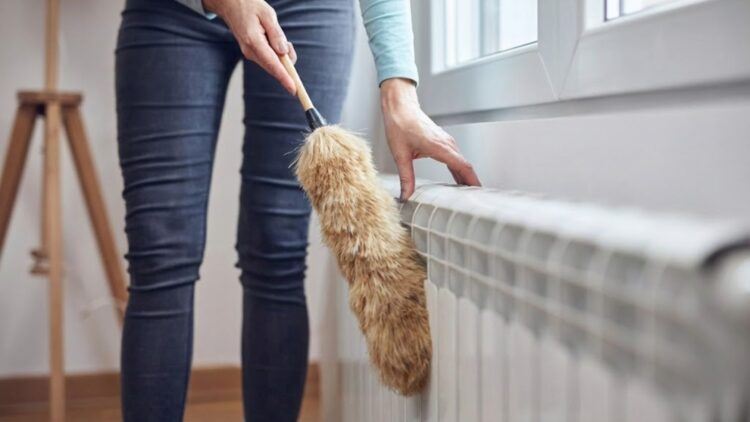
It’s the rainy and coldest time of the year, so many people are starting to turn on their heating—if it wasn’t already on weeks ago. If we don’t want to freeze at home, we need heating, so we have to be very careful with it. We are completely dependent on heating systems at home, but we often don’t realize that we have to maintain them. That’s why experts warn that dust accumulation (however benign it may seem at first) can significantly reduce the performance of radiators.
If you want your heating to work as efficiently as possible without receiving an astronomical bill in a few weeks, stay with us and we’ll tell you all about how to keep your radiators clean.
Radiators’ ultimate enemy: dust
Accumulated dust particles not only prevent the radiator from working efficiently, but also affect the health of everyone in the household. Dust particles can irritate the throat and nasal passages, increasing the risk of colds.
If there are people in the house who are allergic to dust mites, this appliance often accumulates dust, which can affect the quality of life of allergy sufferers without them even realizing it. Therefore, regular cleaning can significantly reduce allergy symptoms without changing any other cleaning routines in the home.
Being lazy when it comes to household chores can be very costly. A layer of dust can reduce the efficiency of your heating by up to 30%. That’s why professional cleaning experts recommend cleaning your radiators at least once or twice a year—ideally between late spring and early fall, just before you turn on your radiator for the first time this season.
How to effectively clean our radiators
For hard-to-reach areas, specialists recommend using a radiator brush together with a vacuum cleaner designed for small spaces. If you have a cordless vacuum cleaner, you can use the smaller head designed for corners.
However, some people get much more creative and use the opposite method: using a hair dryer on maximum power with cold air and blowing inside the radiator to get all the dust that has settled inside to be expelled. We strongly recommend that you wear protective goggles and a mask when doing this, as you could have an allergic reaction to the amount of dust that may have accumulated inside the appliance. It is best to ventilate the room when cleaning the appliance, as this will renew the air more quickly.
Other people use a dust catcher or an old-fashioned duster made out of feathers. We personally recommend those long-armed dusters made out of synthetic fur that look like a scrawny Muppet limb (sorry about the description). If you put a wet tea towel directly under the radiator while you are cleaning it, it wll catch any stray dust bunnies that might try to run away (which will make the general cleanup fareasier!).
Once the radiator is clean, we can wipe it down with a completely dry microfiber cloth every few days (at least once a week) to ensure that dust does not accumulate over time. Although these are typical recommendations, it is best not to place furniture, clothing, or curtains near the radiator, as this inhibits the flow of hot air that ensures a uniform temperature throughout the house. A clean and unobstructed radiator is much more efficient, which makes your utility bill much cheaper.
If we make sure to thoroughly clean our radiators, we will improve air quality (we all know the smell of a dusty radiator heating the house, which is not a pleasant aroma). Dust-free radiators work more efficiently, smell much better, and contribute to a healthier environment.