
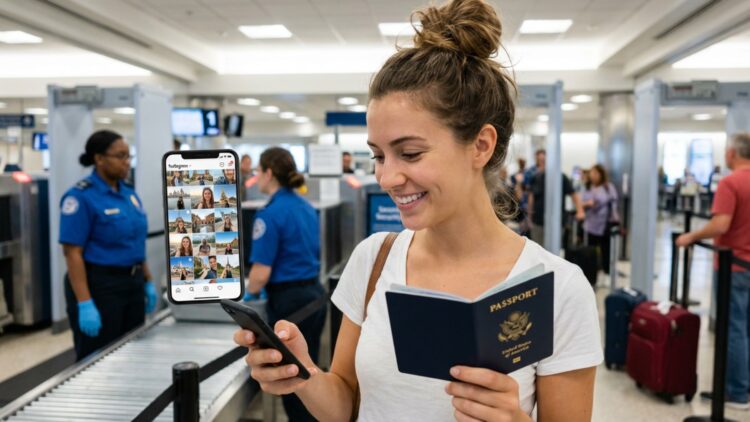
The process of entering the United States to visit as a tourist used to be a minor formality. However, all this may change with Executive Order 14161. Previously, under the Visa Waiver Program (VWP), a simple online application for ESTA (Electronic System for Travel Authorization) was sufficient. The era of frictionless travel is over; the Trump administration has proposed a drastic change to what it means to be a “low-risk” traveler.
Customs and Border Protection (CBP) published a proposal in the Federal Register last wednesday. From now on, travelers would be required to disclose their social media history from the past five years as part of the ESTA application process.
The measures would affect visitors from 42 VWP member countries, including tourist and economic powerhouses such as the United Kingdom, Germany, France, Japan, Australia, and Israel. The debate has been swift: is protecting the country more important than the digital privacy of visitors? Is an individual’s social media history really private if, at the end of the day, they have posted it on the internet for anyone to see?
The new system down to the smallest detail
The current system is the Visa Waiver Program (VWP). This method allows citizens of pre-approved countries to travel to the US for up to 90 days for tourism or business purposes (at least without having to obtain a traditional visa). Instead, they must obtain prior electronic approval through an online platform, known as ESTA.
Until now, providing your social media accounts on the ESTA form was optional, but it may soon become mandatory. The main information requested is your social media usernames or identifiers from the last five years. This allows security agents to search for applicants’ posts, comments, and interactions on public platforms.
The scope of this goes beyond Instagram or X. The proposal also requires the disclosure of phone numbers used in the last five years and email addresses used in the last 10 years. Travelers will also be required to provide family information, including names, dates and places of birth, residences, and phone numbers of immediate family members. The collection of biometric and technical data (such as IP addresses) could also be included when “feasible.”
The Security Vision
The US government’s main motivation is clear: to increase its capacity to control and detect threats. The tightening of the ESTA process is presented as a necessary step to “protect the nation from foreign terrorists.” Since 2019, the State Department has required the vast majority of visa applicants (both immigrant and non-immigrant) to provide their social media handles. More recently, the State Department expanded this “online presence review” to H-1B visa applicants.
Legal experts argue that the measure is too broad and that the predictive value of social media information in determining a traveler’s risk is questionable. Furthermore, this tightening of entry requirements is expected to have a deterrent effect on tourism and business, without actually deterring terrorists who have the tools necessary to blend in with the crowd.
FAQs
Do you have to disclose your social media as of now?
Not yet, it’s in its proposal stage—for now. the CBP published it in the Federal Register on December 10, 2025, and opened a 60-day period for public comment.
Which travelers will need to show their social media?
It affects citizens of the 42 countries participating in the Visa Waiver Program (VWP). These travelers must apply for an Electronic Travel Authorization (ESTA) instead of a traditional visa.
What exact social media accounts should I disclose?
Applicants are required to provide their social media usernames or identifiers from the past five years. The CBP has not been specific on whether this includes forums, private messaging, or which specific platforms.
Applicants are—supposedly—requiered to provide their social media usernames from the last five years. They haven’t specified yet if this includes forums… But we wouldn’t disclose we like to lurk in 4Chan and NSFW subreddits, if we were you… shudders