
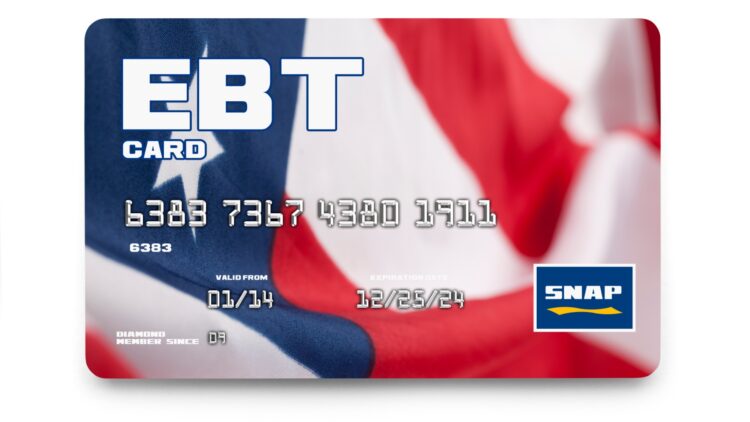
The Supplemental Nutrition Assistance Program (SNAP) helps 41 million low-income people put food on their tables. As we saw last fall, without this safety net, many vulnerable families struggle. However, for years it has suffered from outdated technology that makes it vulnerable: these SNAP cards are very easy to clone.
While modern banking has beefed up and improved the encryption technology on its credit cards, the EBT cards that handle SNAP funds still use totally outdated technology. And all taxpayers pay dearly for it; the result is massive theft of hundreds of millions of dollars in benefits nationwide, leaving thousands of families without food to put on the table.
Why EBT cards are so vulnerable
To understand why the proposed reform is so urgent, we need to look at exactly how EBT cards work and what makes them such an easy target. Like the first credit cards that were created, most EBT cards rely solely on a magnetic strip on the back. This technology is completely archaic and insecure, as the information it stores is static and not encrypted in any way. This is why MT cards are so vulnerable to a method of theft known as card skimming.
To obtain the information on these cards, criminals install devices called screamers on card readers in stores and ATMs. These devices invisibly copy the data from the card. I use hidden cameras or keypads that are placed on top of the card reader to obtain the PIN that people enter. Once they have both pieces of information, thieves can quickly create a cloned card, identical to the original, and use it to empty the beneficiary’s account.
In Ohio alone, the impact of this technological failure meant that between June 2023 and early 2025, nearly 17 million SNAP benefits were stolen from more than 34,000 households. These were not accidental oversights, but rather a systematic failure in the technological and financial security of the most vulnerable members of our society. This money, which was originally intended for basic food needs, ended up being diverted by international criminal organizations.
Federal security
If the situation was already critical, by the end of 2024 it had become much worse. Until then, there had been a temporary federal authority that allowed states to replace stolen benefits with federal funds. However, this federal authority expired on December 20, 2024. Today, if benefits are stolen, families are forced to bear the total loss… Unless their state has independently set aside state funds for compensation. Since families who have suffered SNAP fund theft will not be supported, this is when more people propose fortifying SNAP cards with more secure encryption methods.
The EMV solution
The solution that has already been approved and remains the standard in the private banking sector is EMV (Europay, Mastercard, and Visa) technology. This involves a microchip that is an encrypted microprocessor. When a chip card is used, the card and the terminal communicate securely. Instead of transmitting the permanent account number (as the magnetic strip does), the chip generates a unique, single-use cryptographic code for that specific transaction.
This code is useless to a thief, as it can no longer be used or used to create a cloned card. By encrypting and randomizing data, chip technology makes traditional skimming meaningless, which would provide the same level of protection to SNAP recipients as to any other modern debit cardholder.
This is why the Ohio legislature has proposed the Enhanced Cybersecurity for SNAP Act of 2025 (HB 163). The bill would require the state to complete the transition to chip cards within two years. The cost of the upgrade is estimated at $10.6 million, an investment that the federal government has offered to co-finance at 50%.
Other states such as California, Maryland, and Oklahoma are also in the process of adapting the EMW chip. With the bleeding costs of all this rampant fraud, the modernization of EBT cards cannot come soon enough.