
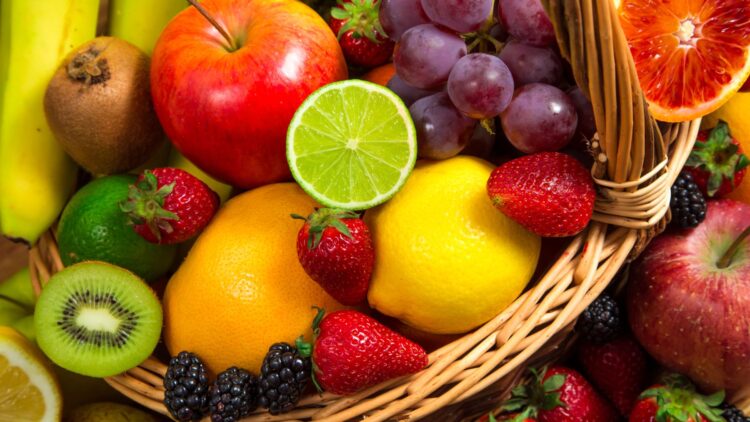
Let’s be honest, how many times have we finished eating and, within minutes, felt that emptiness in our stomachs again? We all want to have a perfect body, but the road to achieving it is fraught with days of hunger. It’s a very common frustration, and it’s not so much a matter of willpower as it is a very calorie-focused diet. If we’re not careful, we can reach our calorie limit at lunch and end up not feeling satiated or remotely full.
That’s why today we’re bringing you a list of the fruits with the lowest calorie density. Energy density is the amount of calories a food has per gram of weight. This is the key to losing weight without suffering too much; by choosing foods with low calorie density, we can eat a lot, feel full, and still have consumed fewer calories.
Understanding calorie density
The secret to all this lies in how our brain interprets food. Believe it or not, our brain mainly registers the volume that food occupies in our stomach. If we eat a small portion of a high-calorie food, our stomach does not stretch much, and the signal is weak. If, on the other hand, we eat a large portion of a low-calorie food, our stomach stretches and ends up sending a strong signal that we are full.
We can achieve this with low-density foods, which are the best allies for a sustainable diet. These foods are low in calories because they add volume thanks to their water and fiber content. Water, with zero calories, is crucial because it adds weight and volume to food. Fiber, on the other hand, adds volume and has another essential benefit: since it is not digested in the stomach, it slows down gastric emptying, prolonging the feeling of fullness long after we have finished eating.
Here is the ranking of fruits most recommended by nutritionists if you are trying to follow a sustainable diet that does not make your life miserable:
Top fruits with low calorie density
- On this list, avocados are the most caloric fruit: 160 kcal per 100 g. This is due to their high content of healthy fats, such as essential fatty acids. Their nutritional value and antioxidants make them a superfruit, often referred to as “green gold.” However, if you are on a diet, it is best to limit yourself to only a quarter—or a third—of a medium avocado.
- Bananas provide approximately 89 kcal per 100 g. They are by far the fruit with the most carbohydrates on the list. But they are a fantastic source of potassium. We must be careful with their ripeness; the riper they are, the higher their natural sugar content. If you like them a lot but want to control your sugar intake, we recommend eating smaller bananas.
- A medium-sized apple has between 52 and 56 kcal per 100 g. It is also rich in insoluble fiber, which helps slow down sugar absorption (perfect for satiety).
- Grapes have 69 kcal per 100g, are rich in antioxidants, easy to digest, and very easy to eat. In fact, this format means that we tend to eat too many grapes without realizing it, so we should always weigh the portion we want before starting to eat the whole bunch.
- Mangoes provide around 60 kcal per 100g. They are a superfood with high nutritional value and are one of the least sweet of all tropical fruits. Pineapple, on the other hand, has only 48 kcal per 100g and contains enzymes such as bromelain, which aid in the digestion of proteins.
- Melon and watermelon provide between 34 and 36 kcal per 100 g. They are among the fruits with the lowest energy content, as their water content is around 92%. This allows us to consume a large volume while staying hydrated.
- Finally, we have strawberries, which only provide 32 kcal per 100 g. They are also almost 90% water, and thanks to their high water and fiber content, we feel full for much longer. Plus, when they’re in season, they’re delicious, so that counts as a double win!