
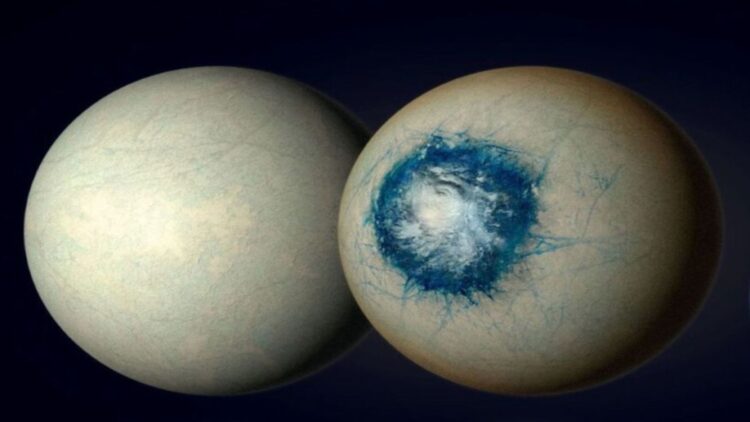
As with much of the news concerning outer space, the James Webb Space Telescope (JWST) plays a crucial role here. Thanks to this telescope, NASA has identified an icy “super-Earth” called LHS 1140 b, one of our best hopes for finding a habitable world beyond Earth. This is no small matter.
A new study has indicated that LHS 1140 b is a super-Earth, a rocky planet larger than our own
The most important aspect of this is that, with a possible atmosphere and liquid water, this planet lies within the habitable zone, sparking the interest of scientists. A new study has indicated that LHS 1140 b is a super-Earth, a rocky planet larger than our own. The discovery of LHS 1140 b, an icy “super-Earth,” has generated great excitement among astronomers, who consider it one of the best candidates in the search for extraterrestrial life. However, perhaps the most significant finding of the study is that it provides evidence for the possible existence of an atmosphere rich in nitrogen and a mostly frozen ocean.
The planet LHS 1140 b is one of the most intriguing among those searching for habitable worlds. This is partly due to its proximity, about 48 light-years from our solar system, and partly because it lies within the habitable zone of its star, LHS 1140, which it orbits every 24.7 days. This super-Earth, located about 40 light-years from Earth, orbits a low-mass red dwarf star, only about one-fifth the size of our Sun. Planet and star are much closer to each other than Earth and the Sun; they are separated by less than one-tenth of the distance.
Initially, researchers thought LHS 1140 b might be similar to Neptune
In any case, the star in this system is much smaller than our own, which implies a closer habitable zone. LHS 1140 b is located in what is called the “habitable zone” or “Goldilocks zone,” the region around a star where temperatures allow for the existence of liquid water, a crucial factor for life as we know it. Initially, researchers thought LHS 1140 b might be similar to Neptune, but new studies using data from the Webb telescope suggest that the planet has an atmosphere, and there might even be conditions for liquid water on its surface. These kinds of findings are essential for continuing to study the outer world and its potential for habitability.
Specifically, adding to the data mentioned above, it is estimated that up to 20% of the planet’s mass could be composed of water, suggesting that a vast ocean might exist beneath a layer of ice in its sun-facing hemisphere. Since its discovery in 2017, several parameters have been estimated, such as its radius: 1.73 times that of Earth; and its mass: 5.6 times that of Earth. Despite the indications that could confirm the presence of liquid water and an atmosphere similar to Earth’s, LHS 1140 b remains a considerable challenge for the scientific community.
Although the Webb telescope’s capabilities are undoubtedly advanced, researchers caution that more time and observation are still needed
The most recent data from the study have ruled out, for example, the possibility that it is a ‘mini-Neptune,’ meaning that the idea of it being a cold, gaseous planet smaller than planets in our solar system has been eliminated. In any case, although the Webb telescope’s capabilities are undoubtedly advanced, researchers caution that more time and observation are still needed to obtain conclusive data.
Finally, although much of the water that may exist on the planet could be frozen, it is also true that the planet is tidally locked to its star, meaning that there is an area that receives constant sunlight. Therefore, the researchers believe that the surface temperature in this area could be around 20 degrees Celsius. Ultimately, this is good news for the scientific community and, at the same time, a further challenge in understanding how the planet behaves and how it can continue to develop under its conditions.