
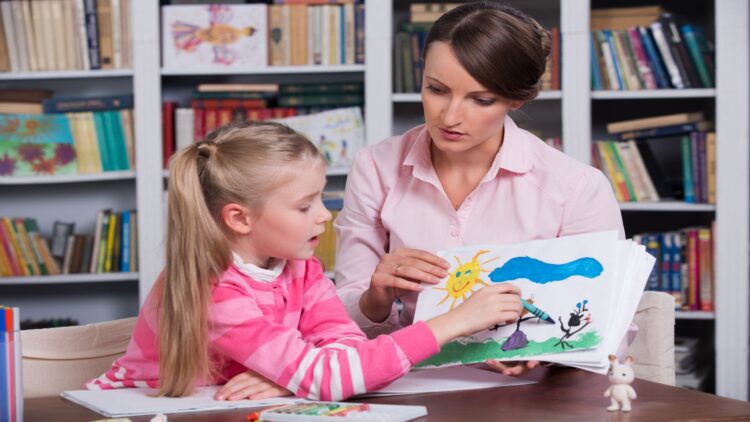
Family education is one of the essential pillars that shape a person’s character (and, indeed, their life). Therefore, raising young children is fundamental. In recent years, much more emphasis has been placed on parenting methods, aiming for a more respectful approach and avoiding the aggressive or violent methods of the past. An expert, who is also a mother herself, has studied over 200 parent-child relationships and concluded that there are six phrases that can help children feel more connected to their parents and, consequently, more easily obey.
The child’s immediate reaction will be to deny it, so the parents’ immediate reaction is to say they believe them
The first phrase mentioned is ‘I believe in you’. This phrase can be used, for example, when an accident happens at home, something breaks, or the child is accused of doing something at school. At that moment, the child’s immediate reaction will be to deny it, so the parents’ immediate reaction is to say they believe them. When children feel doubt, they feel accused and become defensive. Therefore, it’s known that belief dispels shame and creates greater security. So, when a child feels secure, they are able to listen.
When children help solve the problem, they’re more likely to stick with the solution
The second phrase comes when there’s a complex situation and parents can say, “Let’s figure this out together.” When children help solve the problem, they’re more likely to stick with the solution. Making children feel involved, that they’re part of the solution, motivates them. Faced with difficult situations, children tend to look to an adult for help, but the fact is, if possible, involving children in solving a problem can make them feel useful and that they’ve helped resolve it, which gives them confidence.
Many emotions that adults feel are also felt by children, although to a different degree, of course. But frustration, anger, and discomfort are feelings that children experience frequently, and knowing how to manage them is important. Hence the phrase, “You can feel this, I’m right here,” a way for parents to tell their child that feeling bad is okay and that it’s alright because they have a harness. When kids are overwhelmed, they’re in survival mode, and logic doesn’t take over. That’s why the support of a maternal or paternal figure who knows how to manage these situations is so important.
“I’ve got you, no matter what” is a phrase that ensures even if a child has done wrong
‘I’m listening, tell me what’s going on’. This phrase provides reassurance and allows a child to feel safe. Children need to feel heard and understood. This simple shift from paying attention to demanding it dissolves resistance. From this, we can easily connect to the next easy phrase: “I hear you, I’m on your side.” For a child to avoid frustration, it’s essential that they know their parents are not adversaries, but allies. Many crises intensify because children feel misunderstood or in conflict with the person they need most.
Finally, we have the phrase that makes a child feel safe and secure enough to express themselves as they truly feel. “I’ve got you, no matter what” is a phrase that ensures even if a child has done wrong, they will always have a safe place to turn to. And herein lies one of the main differences between obedience based on fear and true responsibility. Yelling doesn’t necessarily make us more listened to; sometimes it’s better to find the right words to find the quickest way forward. When we regularly protect our children’s dignity, we make them feel safe, and this can have positive consequences when facing the outside world. It also makes them feel secure enough to turn to their parents when they need to because they know they are understood.